Blog

  • The best and worst states for first-time home buyer assistance in 2026

    The best and worst states for first-time home buyer assistance in 2026

    Navigating the maze of first-time homebuyer assistance in 2026 can feel overwhelming, especially when every state plays by different rules. Some offer generous forgivable loans and grants, while others limit support to repayable aid—with key differences in loan terms, income caps, and even perks like student debt relief. In a market as fiercely competitive as Santa Barbara, understanding these nuances isn’t just helpful—it’s essential. My focus has always been on finding the angles others overlook, leveraging both my marketing and lending expertise to ensure buyers are set up for success. When these details matter most, a strategic approach can make all the difference.

    Continue to full article

  • Short Sales Can Leave Mortgage Debt

    Short Sales Can Leave Mortgage Debt

    Short sales are a reality some homeowners face—especially when the numbers just don’t add up. In Santa Barbara’s dynamic landscape, a short sale means selling your home for less than the remaining mortgage, with lender approval required every step of the way. Sometimes, the lender might forgive the difference; other times, they may ask for repayment of what’s left. The process is rarely quick—expect plenty of paperwork, proof of new financial hardship, and a deal already in hand before a lender will consider.

    Before heading down that road, I always advise exploring all options: a revised payment plan, loan modification, or even tapping into resources tied to private mortgage insurance. For buyers, short sales can offer a shot at below-market value, but patience and due diligence are essential—these properties are sold as-is, closings are often delayed, and inspections are key.

    Compared to foreclosure, a short sale usually leaves your credit in better shape, and may even let you buy your next home sooner. My lending background and certifications mean I know how to navigate these complex paths—because in this market, every strategic move counts.

  • US Cash Sales Offer Fast Signal

    US Cash Sales Offer Fast Signal

    In the ever-shifting landscape of US real estate, tracking cash sales has always given me a valuable pulse on where the winds are blowing—especially in competitive spots like Santa Barbara. About 25% of existing-home transactions have closed as cash sales in recent years, and those deals often give us a faster read on demand than mortgage-driven or new construction data ever could. When I see cash buyers ramping up alongside rising prices, it’s a clear sign buyer competition is heating up. But if cash sales climb while overall volume drops, it usually means financing hurdles are sidelining many would-be buyers—something I watch closely to spot opportunities for my clients.

    On the flip side, when the share of cash sales drops but prices remain steady, that’s often a signal that credit conditions are easing and more traditional buyers are regaining their footing. Smaller cash investors, in my experience, tend to zero in on properties with probate, tax issues, deferred maintenance, or relocation factors—homes that need creative solutions and an eye for value. Even when financed sales slow, affordability keeps older homes in demand, and that’s where strategic local knowledge pays off.

    For single-family investors, success isn’t just about finding the right property—it’s about understanding the local matrix of taxes, title insurance, renovation costs, and on-the-ground management. That’s why disciplined, locally connected operators consistently outperform big roll-up ambitions. As we look ahead, I expect to see more margin consolidation rather than sweeping market takeovers, and international investors will get further by partnering with savvy locals than going it alone. In a market like ours, strategy and deep roots always win out.

  • Three U.S. Housing Signals for September

    Three U.S. Housing Signals for September

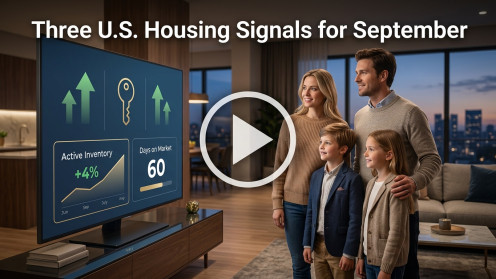
    September brought a shift in U.S. housing trends—pending home sales slipped into negative territory after eight months of growth, a direct effect of rising borrowing costs that’s cooled buyer momentum. Contracts slowed and homes lingered on the market for an average of 60 days, while mortgage rates jumped from about 6% in late Q1 to the upper-6% range. This recalibration has given buyers some negotiating power: the median list price edged down to $424.5K, price reductions now touch nearly 20% of listings, and active inventory is up about 4%. Yet even with more listings, inventory remains roughly 11% below pre-pandemic norms, highlighting a persistent shortage beneath the current buyer hesitation. What matters most right now is how sellers adapt—whether through pricing tweaks, delistings, or new strategies—as both sides navigate firmer borrowing costs and subtle regional shifts. In markets like Santa Barbara, strategy is everything. My background in marketing and lending helps clients stay ahead, whether you’re looking to secure a deal or maximize your listing’s potential.

  • Cities with the fastest-growing home prices in the Santa Maria metro area

    Cities with the fastest-growing home prices in the Santa Maria metro area

    Santa Maria-Santa Barbara’s housing landscape continues to move at a rapid pace. Montecito stands out with a remarkable 12.4% increase, now averaging $5.74 million—reflecting how premium properties in our area command attention even in a tight market. Summerland and Carpinteria are also pushing past the $1.5 million mark, while places like Isla Vista and Goleta have seen subtle declines, a reminder of how high prices and limited inventory shape local trends. I track these shifts closely—not just as a broker, but as a strategist—so my clients have the data and insight they need to navigate every corner of this dynamic market with confidence.

    Continue to full article

  • Home Sales Rise in Weed, CA This Summer

    Home Sales Rise in Weed, CA This Summer

    Noticing the trends beyond our Santa Barbara borders, Weed, CA saw a 17% jump in home sales from May to July 2026—an impressive rise year-over-year. I always keep an eye on shifts like these, since understanding movement in neighboring markets sharpens my strategy here at home. Whether you’re buying or selling, my background in marketing and lending ensures we’re ahead of the curve, spotting opportunities others might overlook. It’s all about knowing where momentum is building—and how to make it work for your next move.

    Continue to full article

  • Home Values Edge Up in Weed, CA

    Home Values Edge Up in Weed, CA

    A 5.5% year-over-year rise in Weed, CA home values signals a pattern of steady appreciation. Even in smaller markets, this kind of consistent growth can reveal where strategic investments pay off. I always keep an eye on these numbers—not just in Santa Barbara, but in any market where momentum is building. Understanding these trends is about more than tracking statistics; it’s about leveraging insight to engineer smart moves and spot overlooked value. That’s the approach I bring to every client and every negotiation.

    Continue to full article

  • New Listings Rise as Buyers Pull Back

    New Listings Rise as Buyers Pull Back

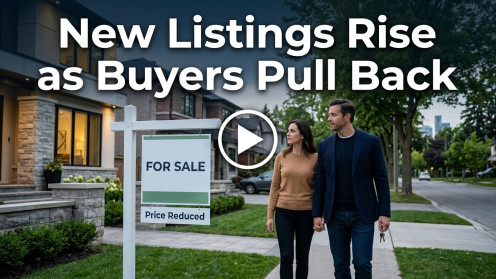
    Recently, US new listings ↑0.4% and total homes for sale ↑0.5%, pushing both measures to their highest levels since Late-Q1 and Mid-Q2.
    At the same time, pending home sales ↓1.1%, reaching their lowest point in 6 mo as buyers faced >$400K median prices nationwide.
    Financing costs stayed in the mid-6%, only slightly below a recent peak, and some house hunters waited through economic uncertainty or hoped rates ease.
    With inventory building and demand softer, active US buyers may find negotiating room, including price cuts, concessions, rate buydowns, or repairs on longer-listed homes.
    An economist said buyers had a window before activity potentially picked up later in Late-Q3, while sellers benefited from pricing correctly from the start.

  • Want Buyers To Remember Your Home? Do These

    Want Buyers To Remember Your Home? Do These

    Before you scroll through listings or step into that first open house, let’s map out a strategy that puts you in control—because successful homebuying in Santa Barbara demands more than luck. Start by laying out the numbers: your income, debts, bills, and what truly feels right for your monthly payment. This clarity makes homeownership sustainable, not stressful. Check your credit early, address any report errors, and pay down those balances—small moves here can open doors to better loan terms and real savings, not just in year one, but long-term. Don’t just focus on the down payment; factor in closing costs, moving expenses, and the inevitable first repairs, so nothing catches you off guard. Pre-approval is your edge—it sharpens your search and tells sellers you’re serious, which matters in a competitive market like ours. And when it’s time to tour, work with a buyer’s agent who knows the landscape, spots hidden pitfalls, and negotiates with your interests at heart. I’ve built my approach on strategy, responsiveness, and an insider’s perspective—because in Santa Barbara, the right plan makes all the difference.

  • Expert Tips for Selling Your Home This Fall and Winter

    Expert Tips for Selling Your Home This Fall and Winter

    Luxury home sales across the US are telling quite a story this season, with transactions ranging from $3.7M all the way to a headline-making $130M. Some markets are seeing their fifth-highest sales still above $10M, which signals just how deep the demand for high-end properties can run in the right neighborhoods. In one standout city, the top five sales were tightly packed between $24M and $40M, hinting at a uniquely competitive luxury tier. It’s worth noting: this data comes from publicly listed properties, so private, off-market deals may be flying under the radar—especially in markets where nondisclosure is the norm. In my own approach to Santa Barbara’s luxury scene, I always dig beneath the surface to uncover those hidden opportunities and engineer campaigns that get noticed. In a landscape defined by these kinds of numbers, strategy and local insight are everything.